

The Rockaway Ocean Club will open in the historic Jacob Riis Park Bathhouse this summer.
In the 1930s the Jacob Riis Bathhouse in the Rockaways was the place for New Yorkers to spend the day at the beach.
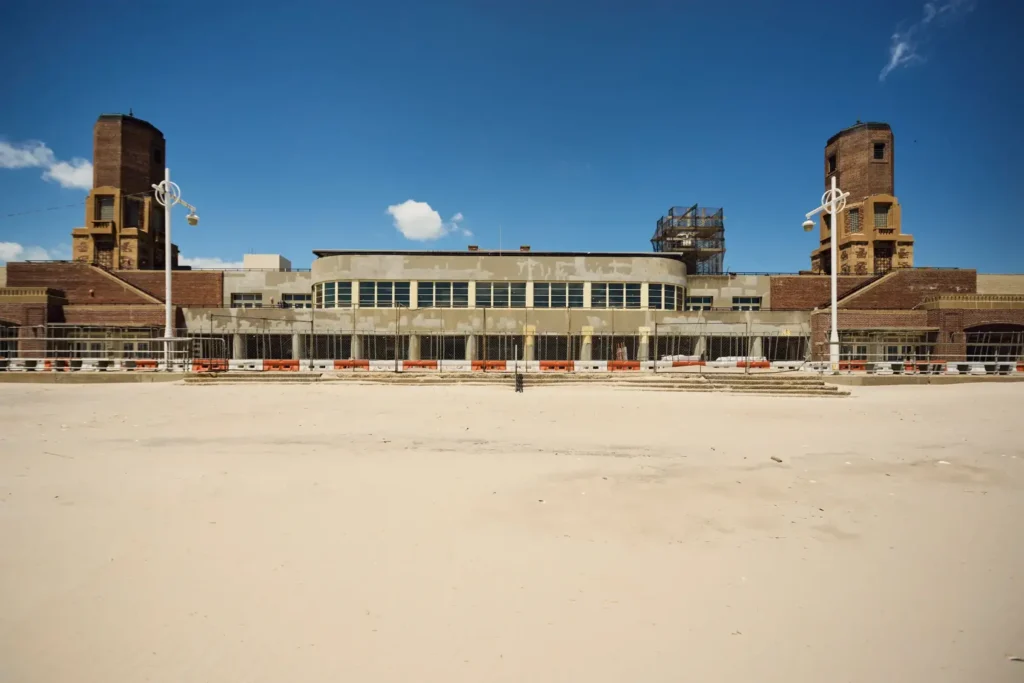
The massive Art Deco venue, located between Neponsit and Fort Tilden in the Robert Moses-designed Jacob Riis Park, accommodated over 8,000 beachgoers at one time. There was a cafeteria on the first floor, a restaurant on a terrace, a solarium on the roof and an orchestra and dance space. The 62-acre parking lot was one of the largest in the world, and the space held 10,000 changing rooms.
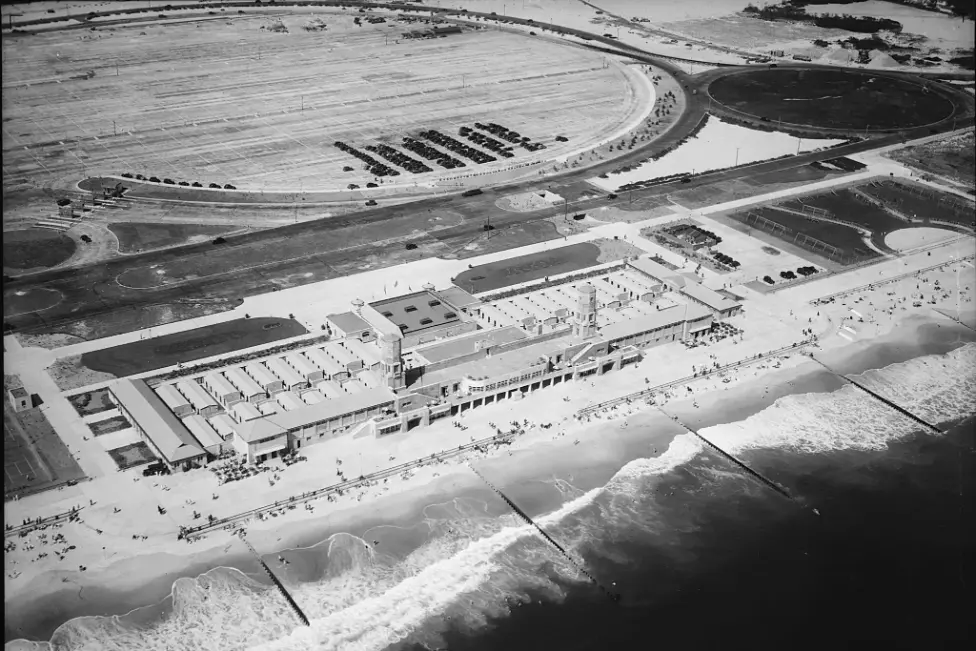
“It was called the People’s Beach, because everybody went there,” said Carlos Cardoso, a partner at Beyer Blinder Belle, an architecture firm that specializes in historic preservation. “It was this great gathering place.”
The bathhouse was boarded up in 1972 after the city was unable to maintain it, and taken over by the National Park Service, which used it to house lifeguards but not much else.
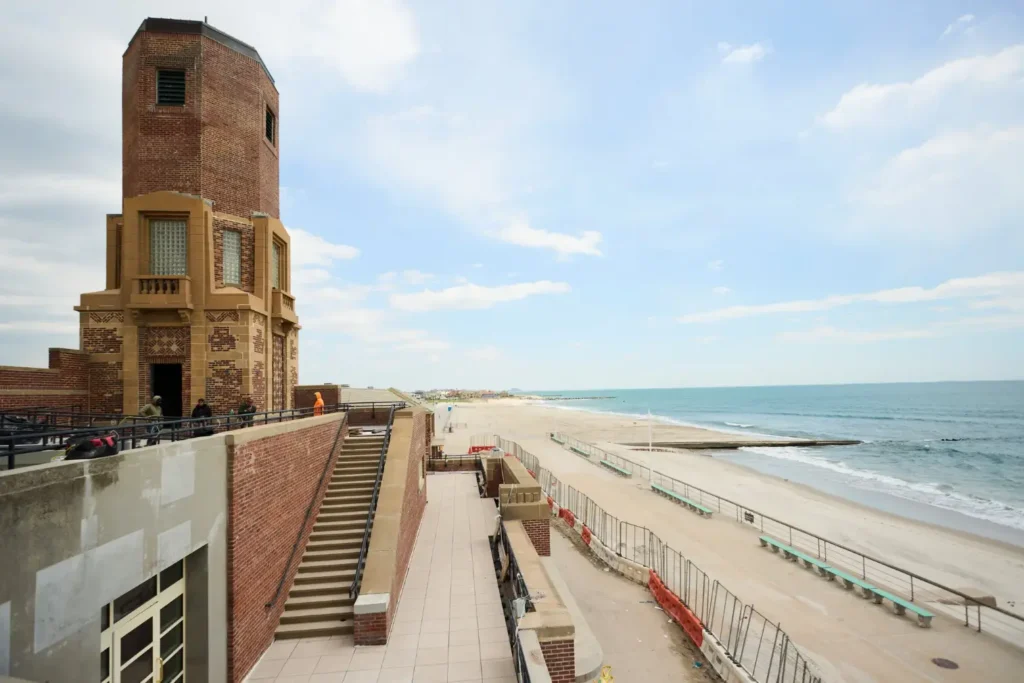
This summer, however, the building is finally getting a second life as the Rockaway Ocean Club. All of the interior courtyard spaces and some of the boardwalk spaces will be open Fourth of July weekend, and the rest will follow after.
The boardwalk will have a juice bar, coffee shop, gelato shop, dive bar, pizzeria, and a store that sells beach essentials, including boogie boards and sunscreen.
The project also includes a 28-room hotel, a rooftop restaurant and a vast courtyard, where there will be live music and beach furniture. There are two, four-story octagonal red brick towers whose purpose is to be determined, said Ursula Damani, who owns a communications and brand development consultancy and is one of the club’s owners. “Is it a private dining room? A mezcal bar? A treatment room? A place with a little jazz trio happening?” wondered Ms. Damani.
Then there is the private beach club portion of the building which has a restaurant and lounge with an ocean view and a pool that can fit 162 people. Membership costs range from $1,000 per year for locals in five ZIP codes along the peninsula to $3,500 for a family of four outside those ZIP codes, and includes lockers, beach setups and programming like bocce tournaments, old-school aerobic classes or craft sessions.
“It’s going to be very, very family-oriented,” said Pierre Antoine Dourneau, the club’s chief operating officer, who previously spent 20 years working for Soho House. “It’s catering to the people who five years ago were dancing in Montauk and now live in a townhouse in Brooklyn or Queens and want a place for their families.”
Ms. Damani said they decided to do a membership component as a means of crowd control. “There are 35,000 to 45,000 people a day on a busy weekend at this beach,” she said. “There had to be some type of mechanism to provide a control for the population flow in and out of the space.”
She insists the vibe will be less snooty and more of a “modern day version of an intergenerational country club,” as she put it.
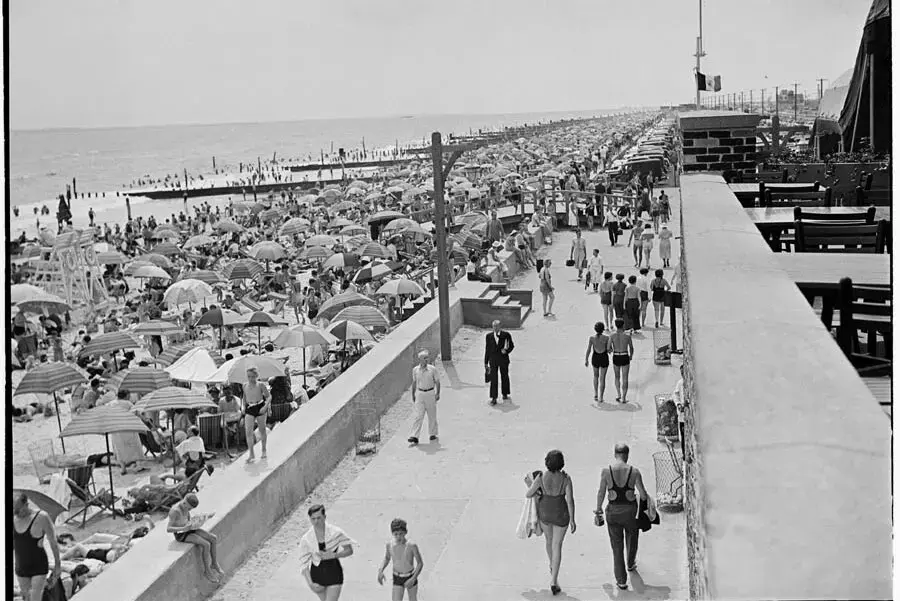
Some locals are already bristling at the concept. “Jacob Riis Park has always been known as the People’s Beach, and it should remain a place that is accessible to everyone, not the base for a private club,” said Mary Farias, 65, who lives in Marine Park and uses Jacob Riis Park year-round for swimming, running and spending time with her family. “The existing building should be restored and maintained by the government so it can serve all visitors.”
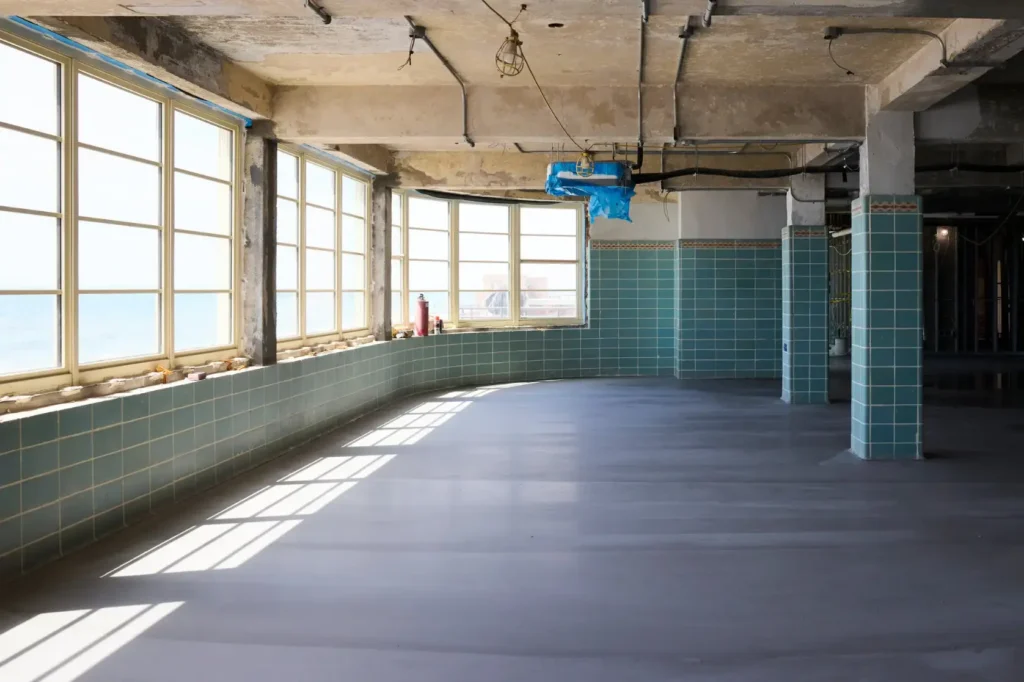
The National Park Service did try to restore the building in the 1990s. The restoration of the bathhouse was supposed to be done in phases, and only phase one — removing asbestos — was funded and completed.
The current owners have been working on this renovation for nine years. It’s a group that includes Brooklyn Bazaar, which already runs the food and beverage program on the Rockaway Beach Boardwalk; SK Development, a real estate development firm that owns luxury residential and mixed-use properties across the state; and Ms. Damani.
The project has cost $88 million, paid for by private investment, a construction loan and a $15 million tax credit linked to the building’s historic status.
“So much goes into bringing a jewel like this back to life,” said Mr. Cardoso, the architect who has worked on the project for almost a decade. “There are operational needs. Everybody has their wish list of what they want to do. And we also have to accommodate different players who are concerned about restoring the building to its authenticity.”
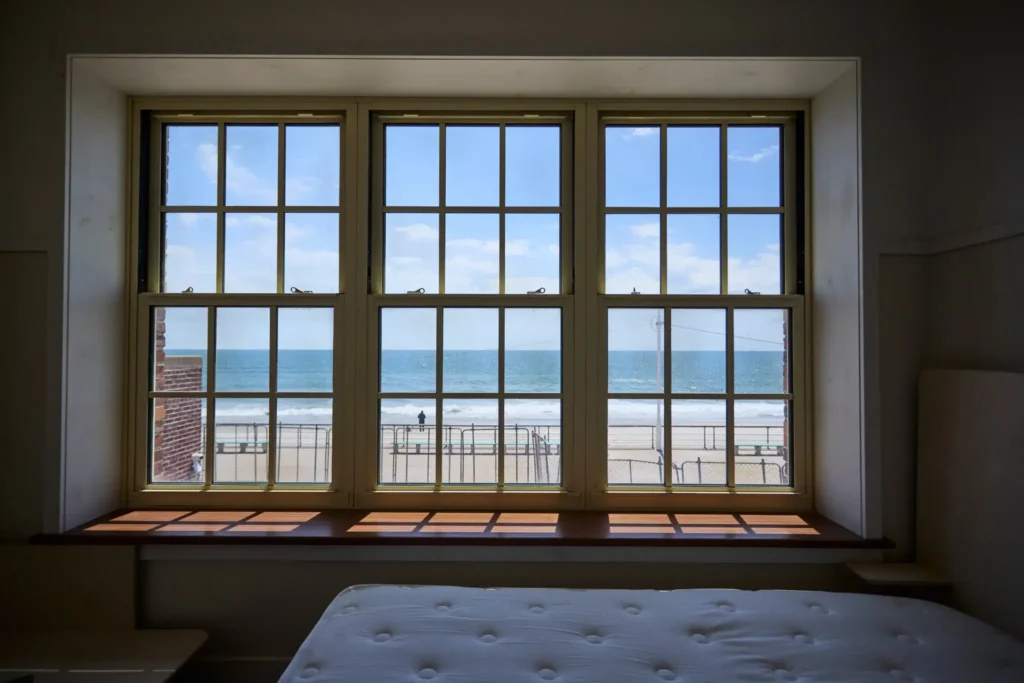
Because the building is on the National Register of Historic Places, many of its features had to be preserved. For example, the windows of the building have to look the same as they did in the 1930s but must also meet updated energy codes. The color palette could not be changed.
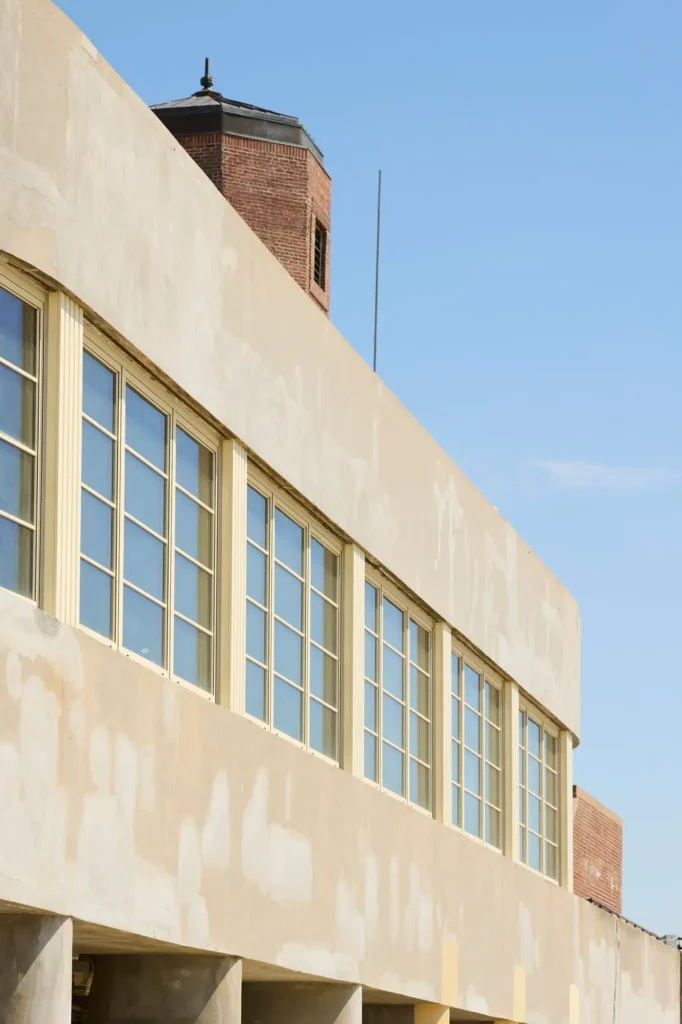
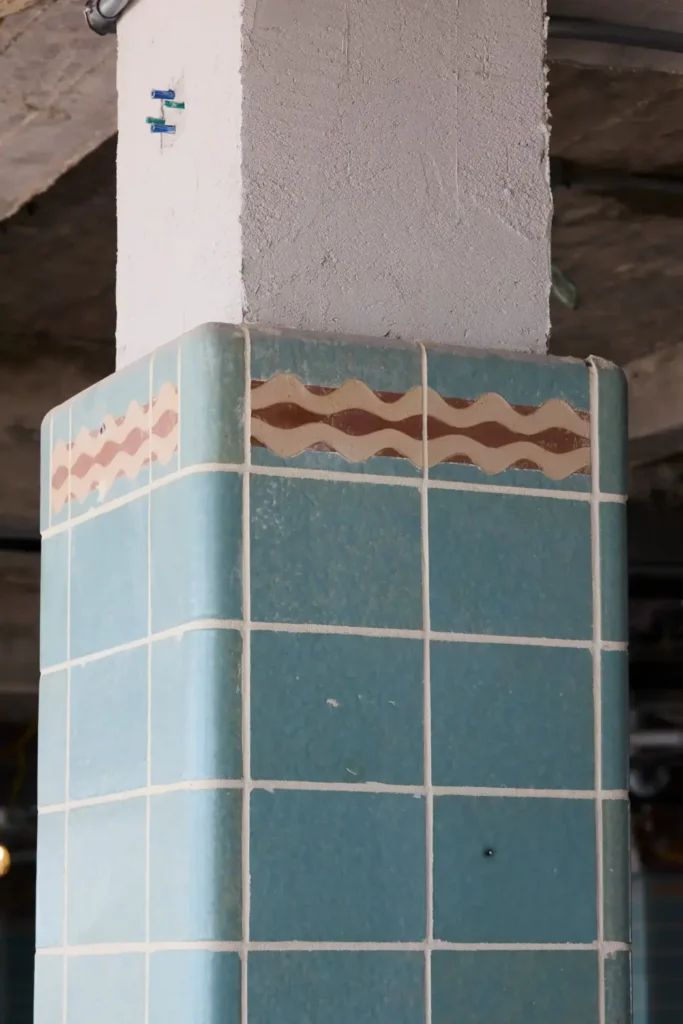
“There was this original glazed tile that was lost because of Hurricane Sandy that we had to bring back and integrate into the design,” said Mr. Cardoso. “There were the old fashioned copper gutters on the outside of the building that we had to try to replicate for historical purposes but were too expensive to rebuild. So now we have aluminum ones that are painted to look like copper.”
The building is also on National Park Service land, which means all landscaping has to be native and wildlife has to be protected. Meanwhile, the club’s location directly on the beach means it must be flood-proof. It now has temporary barriers that get erected before a storm to block water from seeping in, and the courtyard is set up to withstand floods with minimal damage.
Jacob Riis Beach has historically been a meeting spot for the L.G.B.T.Q. community, said Jen Mecum, a 44-year-old lawyer in Crown Heights who has been visiting this part of the beach for 25 years, first with friends and now with their wife and two children. “Part of the reason we would go to that area of the beach is we felt safer because you could let your guard down a little bit,” said Mx. Mecum, who uses they/them pronouns. “Everyone was welcome, but it was also understood that a great deal of the people who would go are L.G.B.T.Q. There were less specific ways you were supposed to dress in order to go swimming.”
They now have conflicting views about the club opening. On one hand, they know the beach won’t stay the same. “Even though the beach will still be public, this changes the demographic of the beach. Every time you are talking about memberships or costs, it is limiting,” they said. “Capitalism and queerness have never been compatible.”
Image
At the same time, Mx. Mecum likes the idea of reinvigorating the building. “It is a very cool building and has a lot of cool history,” they said. “I am going to probably check out what kind of tacos they have.”
The property owners are going to great lengths to attract and appease skeptical locals.
“We made sure the roof, the nicest part of the building with the nicest view, was open to the public,” said Mr. Dourneau. “To make it private wouldn’t have felt right.”
Brian Carey, who is overseeing the beverage program and has lived in the Rockaways since 2015, is determined to hire as many locals as possible. “When we’re fully operational we’ll be staffed at about 250 people,” he said.
Some neighbors welcome it. “I would totally be open to joining, especially for the pool,” said Mike Benigno, 43, an education communication consultant, who grew up in Belle Harbor and now lives on 92nd street in the Rockaways with his wife and two children, ages 6 and 3. “Our kids love the ocean, but the beach gets crowded, and that can get hectic. The pool would be great and safer and more predictable and more controllable.”
Dan Guarino, 65, a photographer who has lived in the Rockaways since the early ’80s, says he likes the idea of bringing life to an area that has been neglected for some time. “We have this great structure, granted it needs a lot of work, but it’s so underused,” he said. “I like the idea of making it popular again and having all these amenities for locals.”
Mr. Benigno put it more bluntly: “It’s better than this shell of a building that has just been sitting there.”